Guides
Beach Holiday Packing Checklist for British Weather: 20 Essentials for Sun, Rain and Wind
A day at the British seaside is rarely one kind of weather. You can arrive in bright sunshine, eat lunch behind a windbreak while sand stings your ankles, and walk back to the car through drizzle that appeared from nowhere. Packing for the coast isn't about choosing between optimism and pessimism. It's about having options.
Dress in Layers, Not One Heavy Outfit
The sea keeps the air along the coast cooler than it feels inland, and the wind does the rest. The car park can feel warmer than the sand, and the sand can feel warmer than the water. That is why layering works better than one thick jumper: start with a base layer that wicks moisture, add a fleece or hoodie, then finish with a windproof outer layer that folds down small.
Wind is the real culprit. A thin windproof shell will keep you warmer than a heavy cotton sweatshirt, because it stops the breeze stripping away the warm air around your body. Leave denim at home for the day — once wet, it stays wet and takes hours to dry. Quick-drying fabrics, swim shorts that double as everyday shorts, and a long-sleeved rash vest for children all work harder at the coast than they do anywhere else.
Pack one complete dry change of clothes per person, including socks, and leave it in the car. It is the single most useful thing you can do.
Shelter Is the Item Most People Leave Behind
A windbreak earns its space in the boot more often than an umbrella does. Umbrellas at the coast have a habit of turning inside out, and the cheap ones rarely survive a second gust. A proper windbreak, or a pop-up beach tent if you have small children, gives you somewhere to sit out of the breeze, a place to change, and a landmark to find your spot again after a swim.
Take sand pegs if your windbreak came with thin metal spikes, because those pull straight out of soft sand. Otherwise bury the legs and pile sand around them, or weigh the guy lines down with bags. Some councils restrict tents, windbreaks and barbecues on busy beaches during the summer, so read the signs at the entrance rather than assuming. A large groundsheet or an old blanket that doesn't mind damp sand completes the setup. Sit on something, not in the sand.
Feet and Footwear
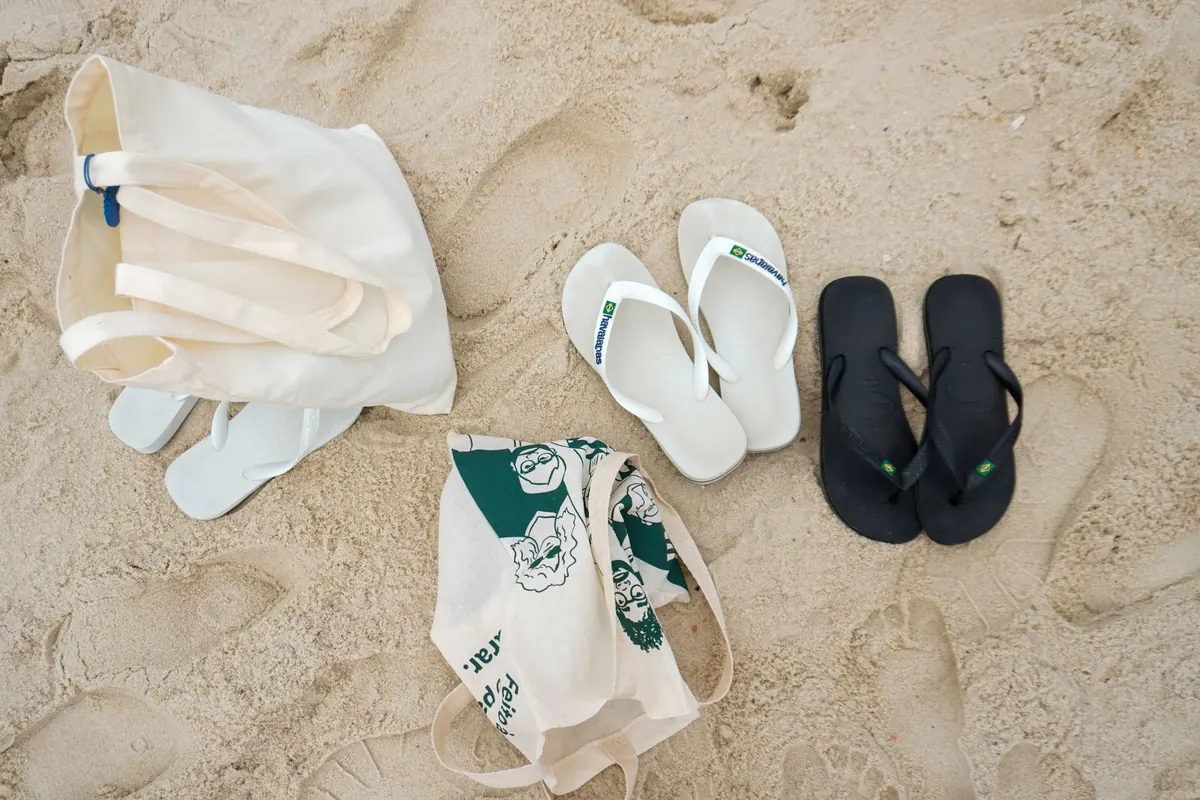
Sand gets everywhere; wet sand gets everywhere and stays there. Open sandals are fine for the promenade, but they fill with pebbles the moment you cross shingle. Old trainers or wetsuit boots are far better for rock pools, crabbing off the harbour wall, or walking a beach that turns to stones halfway along.
Bring spare socks — not a token pair, a proper pair each, kept dry. Cold, wet feet end more beach days early than rain does.
Sun, Skin and the Breeze That Fools You
Cloud does not block ultraviolet light. A grey afternoon in July can still burn, particularly when you are in or beside the water, where reflection increases exposure. Wind makes it worse, because you don't feel the heat building and stay out far longer than you would on a still day.
Use a high-factor, water-resistant sun cream and reapply after swimming and every couple of hours. Lip balm with sun protection, a hat with a chin strap, and sunglasses that stay on your face when the wind picks up are small things that make a long afternoon comfortable. Keep babies and small children in the shade during the strongest part of the day, and if anyone becomes badly burnt, dizzy or unwell, stop and seek medical advice.
Safety and Comfort by the Water
Carry more water than you think you need, especially if you are hauling it across soft sand.
Check tide times before you settle somewhere that could be cut off, and note when lifeguards are on duty. Where lifeguards patrol, swim between the red and yellow flags; a red flag means the water is closed. If you are caught in a rip current, don't try to swim against it — swim parallel to the shore until you are out of it, then head in, and raise one arm if you need help. If someone is in trouble in the water on the coast, dial 999 and ask for the coastguard.
Small kit makes a big difference: a phone in a waterproof pouch, a power bank, plasters, antiseptic wipes and tweezers for splinters.
The 20 Essentials
Clothing and Layers
- Windproof jacket with a hood
- Fleece or mid layer
- Long-sleeved rash vest or base layer
- Swimwear, plus a spare set for children
- Quick-dry shorts or trousers
- Hat with a chin strap, or a warm beanie for windy evenings
- Spare socks and a full dry change of clothes for the car
Shelter and Seating
- Windbreak or pop-up beach tent
- Sand pegs, or something to weigh the guy lines down
- Groundsheet, picnic blanket or beach mat
- Parasol with a screw base, if shade is scarce
Feet
Photo: Cristiano Junior / Pexels
Related Articles